
Pollinators and Biodiversity with Summer varieties
Strategic Resilience
Closing the Pollinator Hunger Gap with Summer Bulbs and Bare Root Perennials
In the management of Ireland’s public parks, heritage estates, and municipal greenways, the “Autumn hunger gap” represents a significant challenge for biodiversity. While our native spring flora provides a vital burst of early-season forage, a critical decline in nectar availability often occurs in the transition from late summer to late autumn—just as queen bumblebees and other pollinators are building the energy reserves required for winter survival. By integrating a curated selection of summer-flowering bulbs and bare root perennials into municipal planting schemes, landscape managers can effectively extend the floral calendar and support Irish pollinator populations through this high-stress period.
The Planting Window: A Six-Week Opportunity
For biodiversity officers and contractors, the optimal window for procurement and installation is February through to the end of March (weather dependent into April).
- Summer Bulbs: Planting during this time allows tubers and corms to establish strong root systems before the soil temperatures rise, ensuring robust, drought-resilient growth.
- Bare Root Perennials: These dormant plants offer a more sustainable, low-plastic alternative to container-grown stock. When planted during dormancy, they experience less transplant shock and integrate more seamlessly into established herbaceous borders.
Pollinator Heroes: Selected Species for Irish Public Spaces

To maximize ecological return on investment, we recommend focusing on species that offer high nectar accessibility (single flowers) and structural diversity.
The Bulb Category: Late-Season Energy
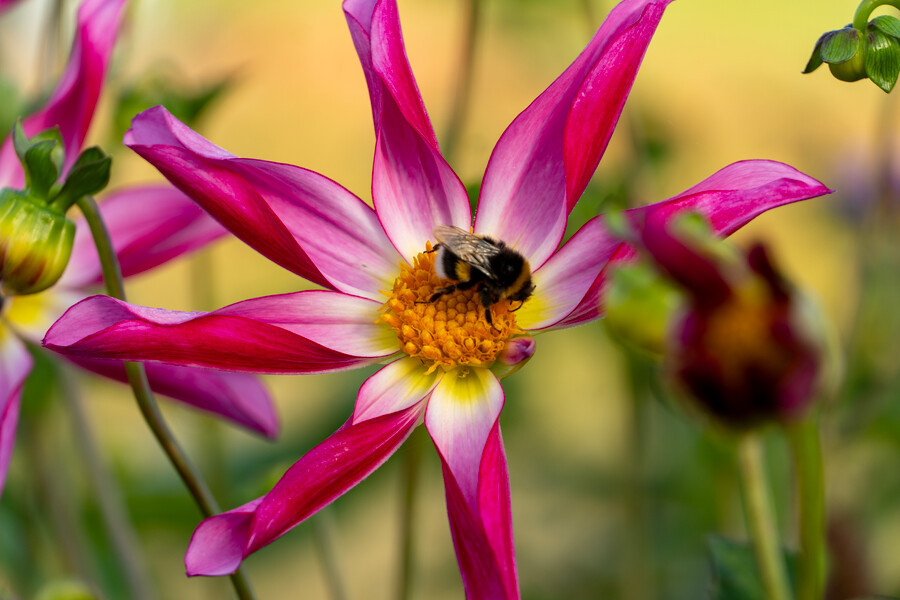
- Single-Flowered Dahlias (e.g., Bishop series): Unlike “double” varieties, open-centered Dahlias provide an unobstructed “landing pad” for generalist bees and hoverflies. Their ability to bloom continuously from July until the first hard frosts makes them an indispensable resource.
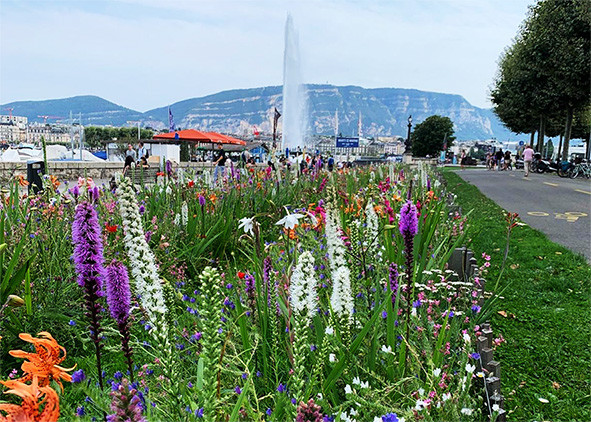
- Liatris spicata (Blazing Star): Unique for its top-down flowering spike, Liatris is a magnet for butterflies. It is exceptionally hardy, thriving in the damp-but-drained soils typical of Irish parklands.
- Gladiolus callianthus ‘Murielae’: Often overlooked in municipal schemes, this peacock orchid provides a deep-nectar source and intoxicating fragrance, attracting long-tongued pollinators well into September.
- Crocosmia: A staple of the Irish landscape, its tubular flowers are essential for late-summer butterfly species and long-tongued bumblebees.
Bare Root Perennials: The Structural Foundation
- Echinacea & Rudbeckia: These “prairie” style perennials are the backbone of the late-summer garden. Their prominent central cones are rich in accessible pollen, supporting a vast array of insect life.
- Helleborus & Iris germanica: These provide the bookends to the season. While Iris bridges the gap into early summer, Hellebores (planted now for next year’s benefit) provide the earliest possible nectar in the bleakest months.
- Lupinus & Papaver: These offer high-protein pollen in early-to-mid summer, ensuring that the larval stages of various pollinators have the nutritional support they need during the peak breeding season.
Bridging the Gap: From Autumn Seeding to Winter Hardiness
A well-designed municipal border should act as a “nectar café” that never truly closes. While many native wildflowers begin to set seed and senesce in late August, the inclusion of Dahlia, Tritoma (Red Hot Poker), and Rudbeckia ensures that the landscape remains functionally alive. This extended flowering period is not merely aesthetic; it is a climate-resilience strategy. As our autumns become milder and longer, pollinators remain active later into the year. Providing forage during October and November can be the difference between a successful hibernation and the collapse of local populations.
Conclusion for Stakeholders
Investing in high-quality trade stock now allows local authorities to meet their biodiversity targets under the All-Ireland Pollinator Plan while reducing long-term maintenance costs through the use of reliable, perennial species. By shifting from traditional bedding toward these nectar-rich bulbs and bare root alternatives, we can create public spaces that are as ecologically significant as they are visually spectacular.